

We also offer the following tests, among others:
Icing Test – Extreme Cold Endurance Testing Solutions
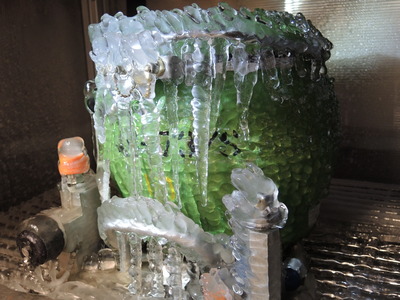
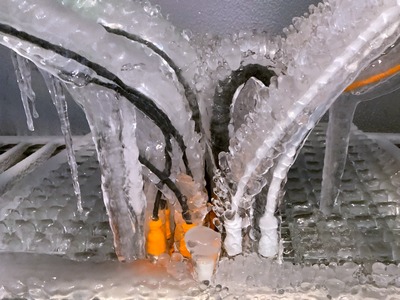
When icing equipment, the effect due to the expansion of water in extreme cold conditions is used to test the endurance or resistance in case of icing.
The devices are iced either under normal atmosphere (simulation of e.g. rain in cold conditions) or under low atmosphere, or cyclically, to simulate a "breathing" of the test specimen with different testing solutions.
The icing thicknesses depend on the target to be achieved. In this way, layer thicknesses of several centimeters can be built up, which can damage housings if necessary, while cyclic icing in the aviation sector simulates the passage of a cloud, which cyclically forms a frost with small layer thicknesses.
Icing test
Standards
- MIL-STD 810H Meth. 500
- MIL-STD 810H Meth. 521→ Case Study
- MIL-STD 810H Meth. 524
- NEMA 250 / UL50
- RTCA DO-160G Section 24→ Case Study

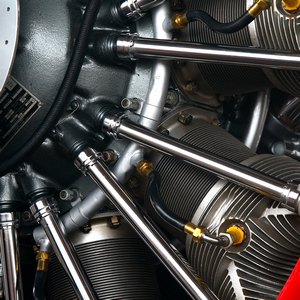
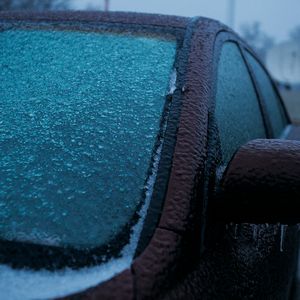
Icing Testing according to RTCA/DO-160G Section 24
Operational Reliability of Avionics Electronics Under Icing Conditions
The Challenge
Aircraft operating at altitude frequently encounter icing conditions caused by supercooled water droplets in clouds. When these droplets impact aircraft surfaces or equipment, they may rapidly freeze and form layers of ice.Icing conditions can affect aircraft equipment in several ways:
- accumulation of ice on external surfaces
- obstruction of connectors or ventilation openings
- increased mechanical loads caused by ice buildup
- reduced thermal dissipation due to insulating ice layers
To ensure reliable operation in such environments, airborne equipment must demonstrate resistance to ice formation and freezing moisture exposure. Environmental qualification according to RTCA/DO-160G includes procedures to evaluate equipment performance under simulated icing conditions.
This case study presents the icing qualification testing of a sealed avionics control module used in a passenger aircraft system.
Device Under Test (DUT)
The tested device was an avionics control electronics module responsible for controlling auxiliary aircraft systems.The electronics are housed in a sealed aluminum enclosure designed to protect internal circuitry from environmental exposure while providing passive heat dissipation.
Key characteristics of the DUT:
Parameter
Description
Product Type
Avionics control electronics
Application
Passenger aircraft systems
Housing
Aluminum enclosure
Cooling concept
Passive thermal dissipation
Connectors
Aviation-grade circular connectors
Test Setup
Testing was performed in a controlled environmental icing chamber capable of generating freezing temperatures and moisture conditions that promote ice formation.The DUT was mounted inside the chamber in a representative orientation. Water droplets were introduced into the chamber while maintaining sub-zero temperatures, allowing controlled ice formation on the equipment surfaces.
Temperature and operational parameters of the DUT were continuously monitored.
Test Conditions
Testing was conducted according to RTCA/DO-160G Section 24 – Icing.Typical environmental parameters include:
Parameter
Typical Condition
Temperature
sub-zero environmental conditions
Moisture source
atomized water droplets
Ice formation
controlled accumulation on surfaces
Exposure duration
defined freezing cycles
Functional monitoring
continuous or periodic
Test Procedure
The environmental qualification test followed the procedure defined in the aerospace standard.- Pre-Test Inspection
Prior to icing exposure, the DUT underwent:- visual inspection
- verification of mechanical integrity
- electrical functional testing
- Icing Exposure
The DUT was placed inside the environmental chamber where water droplets were introduced under freezing temperature conditions.
Ice formed gradually on the external surfaces of the device. - Functional Monitoring
During the exposure period, the DUT was monitored to verify that its electrical functionality remained stable. - Post-Test Evaluation
After completion of the icing cycle, the DUT was removed from the chamber for detailed inspection and functional verification.
Post-Test Inspection
After icing exposure, the DUT underwent detailed inspection and evaluation.Inspection activities included:
- assessment of mechanical integrity
- verification of connector functionality
- inspection of enclosure surfaces
- electrical performance testing
Results
The avionics control unit successfully completed the icing qualification test.Key observations:
Evaluation
Result
Ice accumulation
Present on housing surfaces
Mechanical integrity
No damage observed
Connector functionality
Unaffected
Internal contamination
None detected
Electrical functionality
Fully operational/div>
The aluminum enclosure maintained structural stability and the electronics remained operational throughout the test.
Conclusion
The tested avionics control module successfully passed the icing qualification according to RTCA/DO-160G Section 24.The test confirmed that:
- the enclosure withstands ice formation and freezing temperatures
- connectors and seals remain functional
- electronic systems maintain reliable operation under icing conditions
Why Icing Testing Matters
Icing conditions represent one of the most challenging environmental stresses encountered during aircraft operation.Environmental qualification according to DO-160 helps manufacturers:
- validate equipment performance under freezing conditions
- detect potential vulnerabilities in enclosure design
- ensure reliability in cold-weather and high-altitude environments
- support certification of airborne systems
Environmental Qualification according to MIL-STD-810H – Method 521.4 (Icing / Freezing Rain)
of an Armored Vehicle External Sensor Mount
Background
Armored vehicles operating in cold climates, mountainous regions, or winter combat environments can be exposed to severe icing conditions. Freezing rain and supercooled water droplets may accumulate on external vehicle components, forming ice layers that can impair functionality or mechanical movement.External accessories such as sensor mounts, optical devices, antennas, and auxiliary equipment brackets are particularly vulnerable. Ice accumulation can lead to:
- restricted mechanical movement
- obstruction of sensors or optics
- increased structural loads
- failure of actuators or mounting mechanisms
- laser warning sensors
- environmental monitoring sensors
- tactical communication antennas
Test Objective
The objective of the test was to evaluate the operational reliability of an external sensor mounting bracket when exposed to freezing rain conditions and subsequent ice accumulation.The test investigated:
- formation of ice layers on exposed surfaces
- mechanical loading caused by ice buildup
- ability of the system to maintain functionality
- structural integrity after icing and thaw cycles
Device Under Test (DUT)
Equipment:External armored vehicle sensor mounting bracket.
Application:
Turret-mounted sensor installation on a main battle tank.
Construction:
Component
Description
Base structure
Aluminum alloy bracket
Mounting interface
Steel reinforcement plate
Surface protection
Military-grade anti-corrosion coating
Moving element
Rotatable sensor adjustment mechanism
Dimensions
260 × 180 × 140 mm
Test Setup
Testing was conducted in a controlled climatic test chamber capable of generating freezing rain conditions.Supercooled water droplets were sprayed onto the test specimen while the chamber maintained sub-zero temperatures. This allowed the formation of ice layers similar to those occurring in real winter storm environments.
Test Conditions
Testing followed the procedures defined in MIL-STD-810H Method 521.4.Parameter
Value
Ambient temperature
−10 °C
Water spray rate
approx. 25 mm/h equivalent precipitation
Exposure duration
90 minutes
Ice thickness target
approx. 6–12 mm
Airflow
Simulated wind conditions
After ice accumulation, the DUT underwent functional verification and structural evaluation.
Post-Test Inspection
After exposure, the test specimen was evaluated to determine whether ice accumulation affected its performance.Inspection procedures included:
- visual examination of ice accumulation patterns
- mechanical load inspection
- functional movement testing of adjustable elements
- structural inspection after ice removal
Test Results
Evaluation Parameter
Result
Ice accumulation
Uniform surface ice layer formed
Structural deformation
None observed
Moving mechanism
Operational after ice removal
Coating integrity
No degradation
Mounting interface
Fully intact
Engineering Assessment
The system demonstrated strong resistance to icing effects due to several design features:smooth coated surfaces
reducing ice adhesion
structural reinforcement
preventing deformation under ice loads
robust mounting interfaces
maintaining mechanical stability
sufficient actuator torque
allowing movement after ice removal
Conclusion
The tested sensor mounting bracket successfully met the requirements of MIL-STD-810H Method 521.4 (Icing / Freezing Rain).The component maintained structural integrity and operational capability even after exposure to significant ice accumulation.
The tested design is therefore suitable for deployment in cold climate and winter combat environments, where freezing precipitation and ice formation are expected.
Marketing Summary
Reliable operation even under extreme icing conditions.Environmental qualification according to MIL-STD-810H Icing / Freezing Rain demonstrates that military vehicle components maintain structural stability and operational readiness even after exposure to freezing rain and ice accumulation.
Through robust mechanical design and optimized surface protection, manufacturers can ensure reliable system performance in harsh winter and arctic operational environments.


