Salznebel

Salt Fog Test

Salt fog testing is used for more severe, accelerated corrosion and durability testing on metals and alloys.

The very high degree of sharpness of the corrosion is due to the salt fog test providing a highly concentrated electrolyte, which significantly influences the corrosion rate. The severity of the test depends on the salt concentration, the test temperature and the test cycle design.

The salt spray test was developed by an automotive working group to subject certain components in motor vehicles to a life test under more stringent test conditions.

The test is primarily used for aggravated corrosion testing on metals and alloys.
Request offer
corrosion
Salt Fog  Standards

  • ASTM B 117-73
  • BMW GS 95024--3-1
  • DIN EN 60068-2-11
  • DIN EN 60068-2-52
  • DIN EN ISO 9227 (ersetzt DIN 50021, DIN 53167)
  • DIN EN ISO 9227 NSS
  • DIN IEC 61701
  • MBN LV124-2
  • MIL-STD-810→ Case Study
  • RTCA/DO-160→ Case Study
  • VW 80000
We also offer the following tests, among others:
sand
according to the following standards, among others:

  • DIN EN DIN EN 60068-2-68
  • MIL-STD-810G
  • RTCA DO-160/li>
  • DIN SPEC 79009
  • MIL-STD-202D
  • DEF STAN 00-35

click for more infos
Blowing Sand / Dust
thermal cycling
according to the following standards, among others:

  • DIN EN 60068-2-33
  • MIL-STD 202
  • MIL-STD 883
  • MIL-E 5272
  • MIL-STD-810
  • MIL-T 5422

click for more infos
Thermal Cycling
artificial sunlight
according to the following standards, among others:

  • ASTM
  • DIN EN 60068-2-2
  • DIN ISO 9022-9
  • JDQ 53.3
  • MIL-STD-810H
  • TSM0502G

click for more infos
Sun Simulation
Explanation of the salt spray test

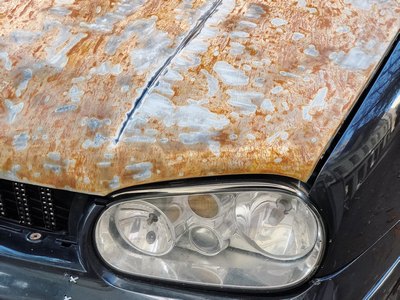
The salt fog test - also called salt spray test - is used to test industrial materials for corrosion resistance to salty atmospheres. The term "corrosion test" that is sometimes used is misleading, as corrosion generally refers to the reaction of a material with its environment that causes a measurable change in the material. In the case of metals, chemical corrosion is of particular importance (DIN EN ISO 8044; formerly DIN 50900). Probably the best known type of chemical corrosion in metals is rusting, which is the oxidation of iron. The salt fog test is only concerned with the corrosive effect caused or promoted by salt solutions. Affected objects and materials are mainly found in vehicle and road construction (salt spreading). Automobiles in particular - but also other vehicles used in winter road traffic, such as bicycles or motorcycles, or even wheelchairs - suffer considerably under the influence of road salt. Not to mention structural elements such as steel girders in bridges or metal guard rails and the like.

Execution of the tests

The object to be tested is placed in a specifically equipped chamber for a specified test time. There, the actual test takes place by continuously exposing the test specimen to a fog atmosphere containing a certain amount of salt. As a rule, sodium chloride solution with a concentration of 5% is used, whereby a PH value of 6.5-7.2 is set. The ambient temperature is kept constant at 35 °C. The saline mist condenses as a salt solution on the test specimen and has a corrosive effect. The goal is to simulate much longer periods of time under time-lapse conditions. The high salt concentration serves this purpose, as does the high temperature. This accelerates the corrosion process considerably and protective coatings applied for the purpose of corrosion protection are also destroyed or lose their effect. Thus, the test specimens actually corrode considerably faster than under normal everyday conditions. The duration of the tests is usually between 96 and 1000 hours, depending on the object and the assumed service life. Each time after 24 hours, the test specimen should be removed and examined for corrosion damage. At the end of the test runs, the test objects should be rinsed with deionized water to remove loosely adhering particles caused by corrosion.
This should be followed by an optical or electrical analysis of the tested material.

Corrosion resistance assessment

If, for example, the effect of a metal-clad corrosion protection is to be evaluated, this can be derived from the time that the tested object copes without showing visible signs of corrosion on the base metal. These are mainly recognizable as traces of red rust. Finally, the real protection effect in everyday life can be derived from the test setup including the time-lapse function.

Case Study

Corrosion Resistance of Avionics Electronics

click here for more info…

Corrosion Resistance of Avionics Electronics
Salt Fog Testing according to RTCA/DO-160G Section 14

The Challenge

Aircraft operate in environments where airborne salt particles can significantly affect materials and electronic systems. Salt-laden air is particularly prevalent in:
  • Coastal airports
  • Marine flight routes
  • Offshore operations
  • Aircraft parked on airport aprons exposed to sea air
Salt contamination can cause corrosion, electrical leakage, connector degradation, and mechanical failure of electronic systems. Over time, even small amounts of salt deposition may lead to severe reliability issues.
To ensure long-term durability, airborne equipment must demonstrate resistance to corrosive environments. Environmental qualification is therefore conducted according to RTCA/DO-160G, which specifies standardized test procedures for airborne equipment.
This case study presents the salt fog qualification testing of a sealed avionics control unit installed in a passenger aircraft.


Device Under Test (DUT)

The tested device was a control electronics module for aircraft auxiliary systems, housed in a sealed aluminum enclosure.
The unit is designed to operate reliably throughout the aircraft’s service life while being exposed to environmental contaminants present in aircraft operating environments.

Key DUT Characteristics

Parameter
Description
Product Type
Avionics control electronics
Application
Passenger aircraft system control
Housing
Aluminum enclosure
Surface Protection
Anodized housing and coated fasteners
Connectors
Aviation-grade circular connectors
Cooling Concept
Passive heat dissipation via enclosure
Installation Location
Avionics compartment
The objective of the test was to verify that salt fog exposure does not impair electrical functionality or cause corrosion affecting performance or safety.


Test Objective

The salt fog test evaluates the susceptibility of equipment to corrosion caused by salt-laden environments.
The test aims to verify:
  • Resistance of the enclosure surface against corrosion
  • Integrity of connector materials and plating
  • Long-term stability of sealing elements
  • Functional performance of electronics after exposure
The DUT remained powered during portions of the test cycle to simulate operational conditions inside the aircraft.


Test Setup

Testing was conducted in a controlled salt fog chamber capable of generating a continuous salt aerosol under defined environmental conditions.
The chamber produces a fine salt aerosol that settles on the surfaces of the DUT, simulating long-term exposure to marine atmospheric conditions.
The device was mounted in the chamber in a representative installation orientation to reproduce realistic contamination patterns.


Test Conditions

Testing was conducted according to RTCA/DO-160G Section 14 – Salt Fog.
Typical environmental parameters include:
Parameter
Typical Test Condition
Salt solution
Sodium chloride solution
Concentration
approx. 5 % NaCl
Temperature
controlled chamber temperature
Exposure duration
multiple exposure cycles
Aerosol generation
continuous atomized fog
The test procedure typically consists of repeated exposure and drying cycles to simulate realistic environmental conditions encountered by aircraft equipment.


Test Procedure

The test program followed the sequence defined in the environmental standard.
  1. Pre-Test Inspection
    • Visual inspection of housing and connectors
    • Functional performance verification
    • Documentation of baseline conditions
  2. Salt Fog Exposure
    • Continuous salt aerosol exposure in the chamber
    • Surface deposition of saline solution on DUT
    • Exposure maintained over several cycles
  3. Drying Phase
    • Controlled drying period to allow salt crystallization
    • Simulation of real operational exposure cycles
  4. Post-Test Evaluation
    • Detailed inspection for corrosion or material degradation
    • Functional verification of the electronics
    • Inspection of connectors and seals


Post-Test Inspection

After completion of the environmental exposure, the DUT was inspected both externally and internally.
Inspection activities included:
  • Assessment of surface corrosion
  • Inspection of fasteners and connector plating
  • Verification of sealing elements
  • Functional electrical testing
  • Internal contamination inspection


Results

The device successfully completed the salt fog qualification test.
Key observations:
Evaluation
Result
Housing corrosion
None observed
Connector degradation
None observed
Surface salt residue
Present externally
Internal contamination
None detected
Electrical functionality
Fully operational
The anodized aluminum housing and corrosion-resistant connectors demonstrated excellent resistance against salt-induced corrosion.


Conclusion

The avionics control unit successfully passed the salt fog environmental qualification according to RTCA/DO-160G Section 14.
The test confirmed that:
  • The enclosure provides effective protection against corrosive environments
  • No corrosion occurred that could impair performance
  • The electronics remain fully operational after exposure
These results confirm the device’s suitability for long-term operation in aircraft environments where exposure to salt-laden air may occur.


Why Salt Fog Testing Matters

Salt fog testing plays a critical role in verifying the durability of airborne equipment operating in coastal or marine environments.
Environmental qualification helps manufacturers:
  • Detect corrosion risks early in product development
  • Validate protective coatings and enclosure concepts
  • Ensure compliance with aerospace environmental requirements
  • Improve product reliability and lifetime performance
Testing according to DO-160 therefore remains a fundamental step in the certification of airborne equipment.

Case Study

Salt Fog Corrosion Resistance of an Armored Vehicle Metal Component

click here for more info…

Salt Fog Corrosion Resistance of an Armored Vehicle Metal Component
Environmental Qualification according to MIL-STD-810H – Method 509.7 (Salt Fog)


Background

Military vehicles frequently operate in coastal regions, naval deployment zones, and humid maritime environments. In such conditions, metal components are exposed to salt-laden air and saline moisture, which can significantly accelerate corrosion processes.
For armored vehicles such as main battle tanks or infantry fighting vehicles, many external components—including mounting brackets, structural fittings, sensor mounts, and armor attachments—must withstand prolonged salt exposure.
One critical example is a steel mounting bracket used for external equipment installation on the vehicle hull. This bracket may support systems such as:
  • auxiliary armor modules
  • optical sensors
  • communication antennas
  • external storage systems
Corrosion of such components can lead to:
  • mechanical weakening of load-bearing parts
  • loosening of mounted equipment
  • reduced operational readiness
  • increased maintenance requirements
Therefore, metallic components used in military vehicles must demonstrate resistance to salt-induced corrosion through environmental testing according to MIL-STD-810H Method 509.7 (Salt Fog).


Test Objective

The objective of the test was to evaluate the corrosion resistance of a steel mounting bracket intended for installation on the exterior hull of an armored combat vehicle.
The test assessed:
  • corrosion resistance of protective coatings
  • susceptibility to pitting or surface corrosion
  • mechanical integrity after exposure
  • protection of threaded interfaces and mounting surfaces


Device Under Test (DUT)

Equipment:
External Armored vehicle mounting bracket.
Application:
Attachment of external equipment on armored vehicle hull.
Construction:
Component
Description
Base material
High-strength structural steel
Surface treatment
Zinc-nickel plating
Protective coating
Military-grade epoxy paint
Fastener interfaces
Stainless steel threaded inserts
Dimensions
180 × 90 × 60 mm
The bracket was mounted in a representative vehicle hull fixture to replicate realistic installation conditions and to evaluate corrosion behavior in interfaces and crevices.


Test Setup

Testing was conducted in a controlled salt fog chamber designed to simulate corrosive maritime environments.
The chamber generates a continuous saline mist atmosphere, depositing fine salt particles on the exposed surfaces of the test specimen.
Test solution:
  • 5 % sodium chloride (NaCl) solution
  • deionized water
  • pH adjusted according to MIL-STD requirements


Test Conditions

Testing followed MIL-STD-810H Method 509.7 – Salt Fog.
This method consists of repeated exposure cycles, alternating between salt fog exposure and drying periods.
Parameter
Value
Salt solution concentration
5 % NaCl
Chamber temperature
35 °C
Exposure cycle
24 h salt fog + 24 h drying
Number of cycles
2 cycles (48 h total exposure)
Orientation
15–30° from vertical
The cyclic exposure replicates real-world conditions where salt deposits accumulate during humid exposure and crystallize during drying phases, accelerating corrosion mechanisms.


Post-Test Inspection

Following completion of the salt fog exposure, the bracket was removed from the chamber and evaluated for corrosion damage.
Inspection methods:
  • visual corrosion assessment
  • coating adhesion verification
  • microscopic surface inspection
  • mechanical integrity check
  • threaded interface inspection


Test Results

Parameter
Result
Coating degradation
Minor discoloration only
Surface corrosion
No significant corrosion observed
Pitting corrosion
None detected
Threaded interfaces
Fully functional
Structural integrity
No degradation
Small traces of salt residue were present on the coating surface but did not lead to corrosion of the base material.


Engineering Assessment

The corrosion resistance of the component was primarily attributed to the following design features:
zinc-nickel plating
providing sacrificial corrosion protection
high-performance epoxy coating
acting as a barrier layer
use of stainless steel inserts
preventing galvanic corrosion in threaded areas
proper coating thickness and uniform coverage
especially at edges and corners
These protective measures effectively prevented corrosion under simulated maritime exposure conditions.


Conclusion

The tested armored vehicle mounting bracket successfully met the requirements of MIL-STD-810H Method 509.7 (Salt Fog).
Even under repeated exposure to saline mist and drying cycles, the component demonstrated:
  • excellent corrosion resistance
  • preserved mechanical functionality
  • intact protective coating
The component is therefore suitable for use in maritime, coastal, and high-humidity operational environments.


Marketing Summary

Protection against corrosion in the harshest environments.
Environmental qualification testing according to MIL-STD-810H Salt Fog demonstrates that military-grade metal components maintain structural integrity and corrosion resistance even when exposed to aggressive saline atmospheres.
Through optimized material selection and protective coatings, manufacturers can ensure long-term durability of armored vehicle components in coastal deployments and naval operations.